Cloud Ride

By Jim Janus

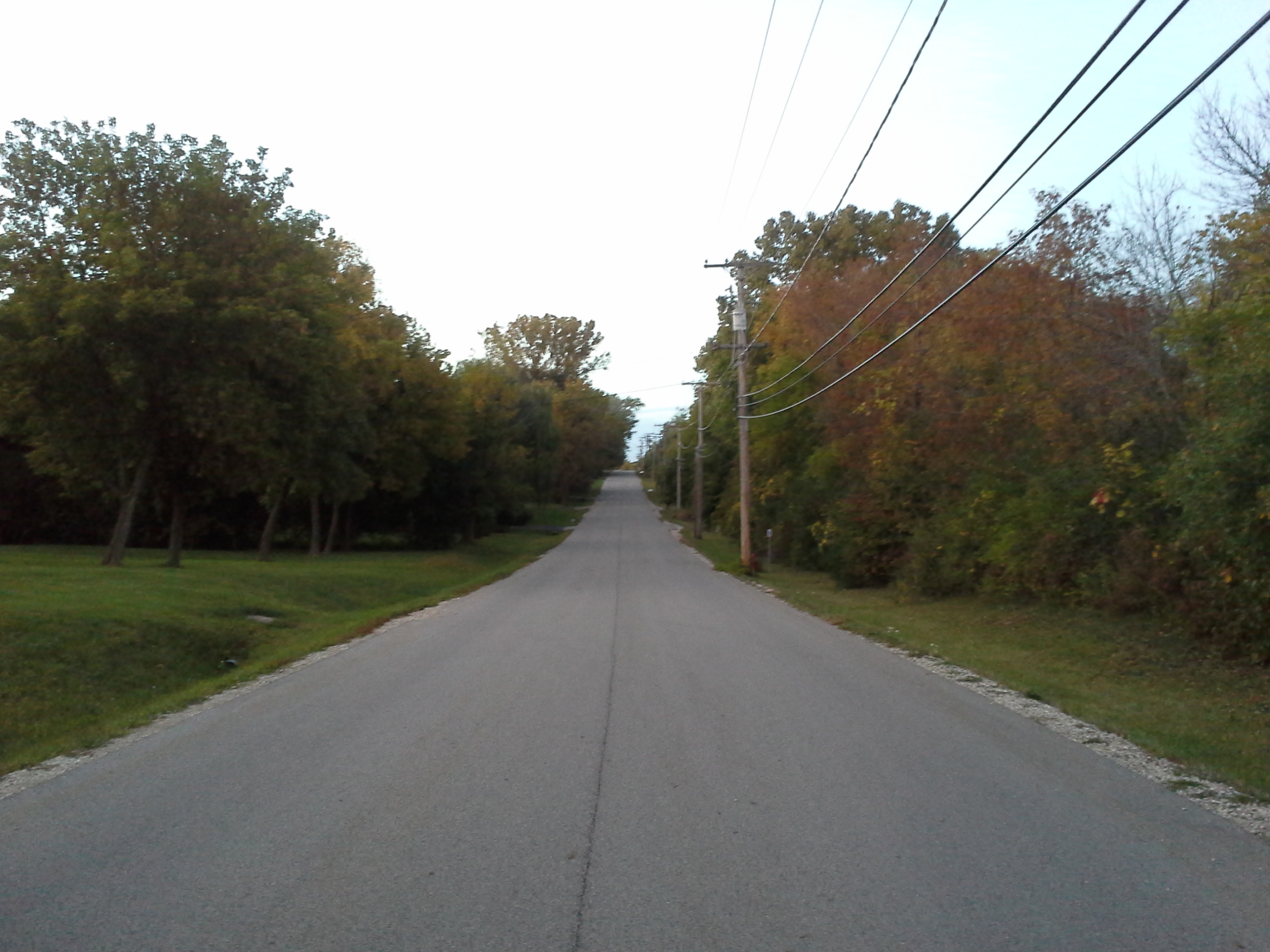
DSC_0003

When you tell your friend
Look at that cloud!
She probably won’t see it
Like you do

She won’t see its golden left
Catching the November sunset
Or its bluish right
Looking for the moon-rise

She won’t see its grey underside
Getting larger as it gradually comes down
Onto you, like a saucer in a sci-fi movie
The kind they stopped making

It’s the disordered dishes
And the unopened mail
The jumbled bed cover
And the bag that needs to go out

You say, Look again!
And she says,
In a few minutes
After I do these things

But you know clouds
Always moving, always changing
And before she’s done
This one has landed and taken off

And you’re up in the dark blue
Being carried southwest
Higher and higher
To the brilliant evening star

1 Comment

Filed under Poetry

The Robin

The Robin
He put the two spoons into the tray in the kitchen drawer, folded the dish towel over the oven’s handle, and turned to the living room.

“Thanks for dinner,” he called to her.  “Your vegetable soup is always excellent.”

She smiled and settled down into the loveseat, leaning her back against one armrest.  The sun brightened her as it moved lower behind branches and changing leaves.  She liked to watch the birdfeeder at the back.  Yesterday morning two faded cardinals perched on the corner post of the wood fence.  One peeping, as the other hopped to the feeder and back with the dark seed.

Now there were no birds.

She rested her hand on her stomach and looked at her ring.  Then she pulled up her knees and wrapped herself in a brown blanket, her lips straight as she looked again through the large window onto the yard.

He knew she wasn’t thinking about what was out there.  He called to her, “Will you go for a walk with me?”

She turned to him, relieved by the interruption.  “Of course I will, honey.”

He said, “I first need to check my work email.”

<><><>

In the laundry room each put on shoes and a jacket.  She asked, “Where do you want to walk?”

He chose a route he thought would get work off his mind, so he could think with her about what happened in the morning.  “Let’s leave the subdivision, and go to the farmer’s field.”

She took the flashlight from the shelf.  “We’ll need this for the way back.  It gets dark early now.”

They walked down the driveway into the cool, graying evening.  Before crossing the quiet side-street each felt for the other’s hand.  In a minute they turned onto the half-mile stretch of road that ran north, alongside a line of trees that screened the county bike trail.

He said, “I like this road.  The old trees on both sides, all the way to the end.  And I like that it’s straight, that it rises and dips a little, like a real country road.”

“And I like the rabbits,” she said.  She pointed to a gray-brown, furry lump.  It was still, and facing into the trees by the trail.  “He thinks if he doesn’t move we won’t notice him.”  Then she called sweetly, “We see you!”

She added, “I like the trees too, especially now with the colored leaves.  But the mailboxes.  Why are they on the trail side?  The people have to cross the street to get their mail.”

“I never thought about that.”  And he smiled knowing that what he’d say next wouldn’t satisfy her.  “Maybe the village wanted the boxes on the same side as the telephone poles.”

She liked when he made up answers for things.  But she let him know when he didn’t come up with a good one.  “They’re simply on the wrong side.”

Behind them the whisper of a car’s tires on pavement came closer.  They moved over to the narrow strip of gravel.  The car passed slowly and continued on.

“At least there aren’t many cars,” he said.

They became quiet in their own thoughts.  He looked toward an open garage with tools covering the inside walls.  She, at fall flowers in a garden near the road.

As they continued to walk, he said to himself, “Telephone poles and mailboxes.”  Then out loud, “It’s easy here to imagine it’s the seventies.”  He started to daydream and said, “Simpler times.”

They passed a house that, like the others, sat far enough back from the road that a group of old trees could spread their jagged limbs over the large front yard.  A long, gravel driveway bordered one side of the property and gave some weathered, undriven cars a place to be.  The small house’s front door was on a cement stoop.  Next to it stood a tall aluminum pole.  At the top the American flag drooped motionless, faded.

After the house he saw the mowed grass of the park-district baseball field.  No one was there.  In a far corner, a flat area of sand marked the infield.  The tall, chain-link backstop drew his gaze.  Behind it a line of trees screened a two-lane county route that ran the same direction as the road.  From there a high pitched trill of a squad car came and went.  It woke him up from his slide into home-plate.

“Those times seem simpler to me,” he corrected himself, “because I was a boy then.”

She looked at him and smiled.  “I’d like to have seen you as a boy.”

“A boy,” he repeated in a whisper.  Then he spoke in the serious voice he used when talking about his job.  “They’re cutting costs again.  I won’t get the new position.”  Then with a gentle voice, the one he used to ask her for help.  “Why do I stay at that place?  Twenty-five years under fluorescent lights.  My back to the window, the kind that doesn’t open.  Each day is the same–the building won’t let in the season.”

She wanted to say something, like if she owned a company he’d be CEO.  She knew he did well at his job, and hoped with him for a position where he could do more.  But she also liked that he came home at dinner.  She squeezed his hand and said, “I’m sorry, honey.”  And after a pause, “Maybe that new position would have been too much.”

On other walks they wouldn’t hold hands the whole time, but this time they did not let go.  His hand stayed warm because she was holding it.  And at that moment he thought only of her, that she cared for him, that she encouraged him to appreciate family, that she encouraged him to pursue his creativity.

She went on, “Today Agnes asked me to take her to the club.  Years ago she’d pass the time there since Joe was putting so much into his career.  They never had children.  She said they didn’t want kids.  Now there’s none to look in on them.  They need me to take them to the doctor, to help them around the house.  I cross their street to bring in their mail.”

He thought of their being old one day, sitting together at home.  No doorbell.  No ring of the telephone.  Emptiness.

<><><>

At a half-mile they reached the road’s end, the T at the east-west street.  They crossed to the field.  It was lined with stubs of dried cornstalks.

He looked up slightly, into the distance as far as he could.  Low in the west, pink wisps of clouds glowed in front of deep blue.

“The sky,”  he said, “It’s so big here.  So open.”

She too liked the view there, especially after sunset.  “It’s beautiful.”

He looked into the field.  “Last Saturday I saw them having a bonfire and hayride over there.  Boys and girls laughing and screaming.  Really having a good time.”

She smiled.  “Makes me think of when I was a girl.”

A group of robins fluttered among the top branches near the trail.  She looked at them and forgot the rest of what she was going to say.

He’d never seen her pay attention to robins.  She would look for birds that were harder to find.  “What is it?” he asked.

“I just had a memory,” she answered.  “When I was a girl, I would walk with my older sister to and from school.  One time it was spring and we were going along the path through some trees.  On the ground I found a tiny blue egg.  It was cracked and empty.”

He started to say it’s not unusual, but stopped.

“When I stood up, just a little higher than me I saw the nest.  And poking above it, I saw the head of the mother.  I remember her eye, round and black.  She was staring at me like she knew the egg was gone, like she knew there was nothing she could do.”

He put his arm around her.  She rested her head on his shoulder and he could feel her shaking.

She sobbed.  “I told the robin that everything would be okay.  I told her she would have others.”

He hugged her and listened to her cry.  And he began too, in his chest and throat and eyes.  He swallowed.  Then he said quietly, “We’ll try again.  Like the doctor said.”  They held each other for a minute as the sky became a deeper blue.

A single screech of a young great horned howl came from the trees.  Then, overhead, the silhouette of the mother’s outstretched wings glided silently into the woods.

He said, “Let’s go back.”  And before crossing the east-west street each felt for the other’s hand.  She felt hers become warm, because he was holding it.

Leave a comment

Filed under Fiction, Short Story

A Star

Stars
It was a star
One of thousands
And he picked it
Lined it up
and traveled to it
Not knowing
If he would get there
And how his life
Would change

It’s
Amazement!

Leave a comment

Filed under Poetry

In the Small Garden of Fruit Trees

Butterfly

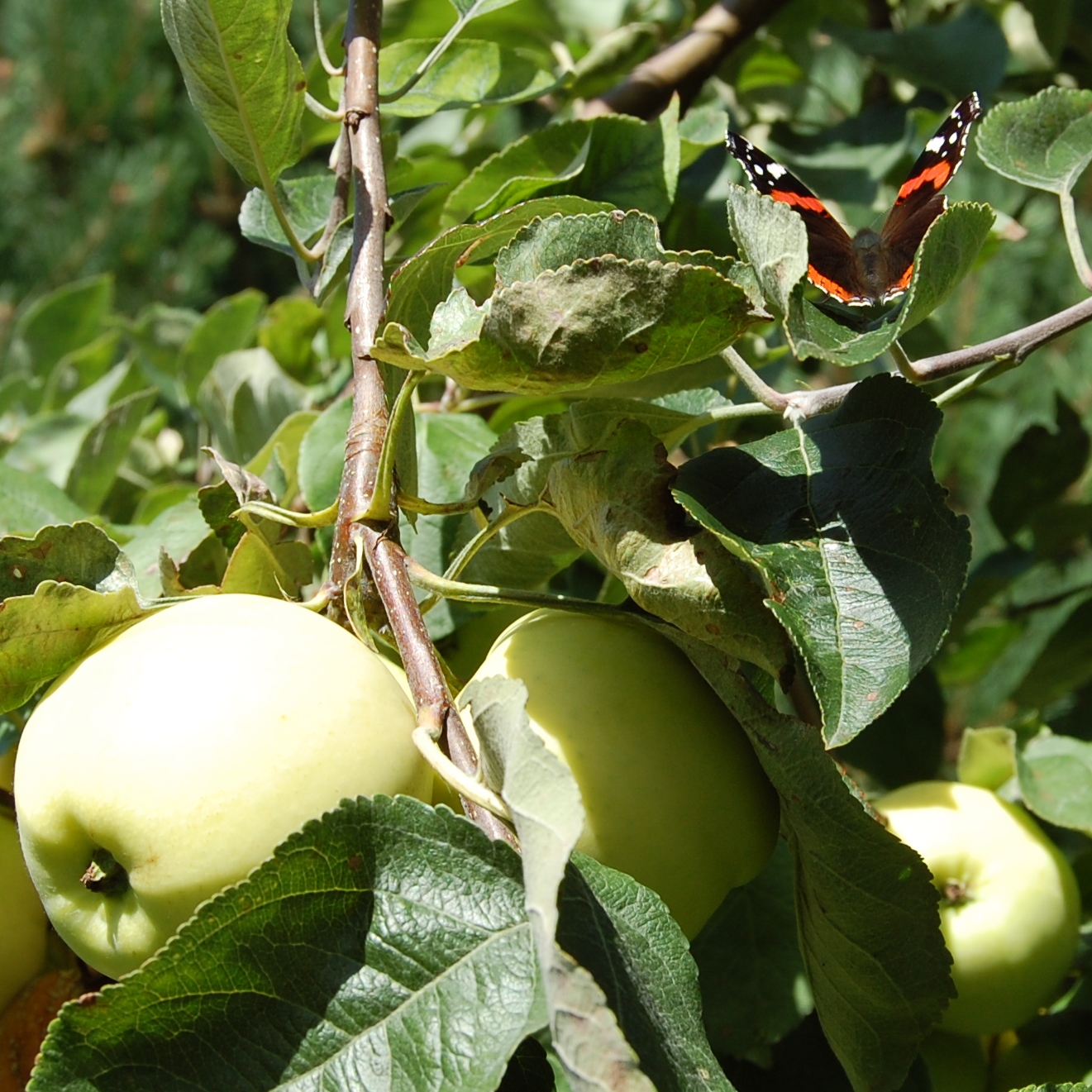
Here–there is some peace by the sea, and in the small garden of fruit trees.  Where in late August I sit and watch the butterflies work within the leaves and branches, around the attached apples.  It’s work for the butterflies.  But their fluttering and swirling looks like dancing.  One settles on an apple, then lifts, and flies directly to me.  It lands on my white shirt, its red-tipped, black wings opening and closing.  One day I watched for hours.  They don’t go to the sea, and they don’t go to the village.  In the evening they find someplace here to sleep.  I know this because the next morning I see them again, circling in the new sun, while the visitors still sleep or have just gotten up, to nibble on last night’s bread and cold meats, heat up water for tea, and prepare pastries for breakfast.

2 Comments

Filed under Fiction, Poetry

Take My Data, Please!

State Line

“What did you and Abdul discuss on the phone that night.”

“We talked work.”

“You talked work?

“Yes.”

“At one-thirty on a Saturday morning?”

“We both work for Tech Corp, just down the street.”

“Edgar, here, and I both work for the Agency.  We don’t call each other at one-thirty in the morning?”

“Well I clearly remember what Abdul and I talked about.”

“Because that’s when you two hatched your plot!”

“No.  Abdul and I were on a conference call.”

“A midnight conference call?”

“Yes!”

“With your terror network?”

“Uh, no.  With the local area network.”

“Who?”

“The team at Tech Corp that supports the LAN.”

“Can’t Tech Corp get its work done by five P.M on Friday like normal people?”

“Tech Corp needed to update its website.  They won’t let us do that during the day.”

“Who’s ‘us?’  You and Abdul?

“Yes.”

“Tech Corp trusts you two with their website?”

“Yes.  But we’re just part of the team.”

“You say that you and Abdul communicated that night via conference call?”

“Yes.”

“But the call the Agency traced…it was a direct call from Abdul’s phone in Pakistan, to your phone in Winthrop Harbor.”

“Wow!  Abdul’s from Pakistan?”

“You didn’t know that?”

“I knew that Abdul worked offshore, but I had no idea he was in…”

“We traced the direct call from Abdul to you.”

“That’s right.  Abdul called me, and for a few minutes we spoke directly.”

“You’re saying that, even though you were both on the Tech Corp conference call, you and Abdul spoke on a separate, private call?”

“Happens all the time.”

“Why’s that?”

“Because on those calls there are twenty-five or more people.”

“That’s what conference calls are for.  Lots of people.”

“Yeah, but during a website upgrade, there can be many technical conversations going at the same time.”

“So?”

“It gets confusing.”

“And it was confusing that night?”

“Yes!  Abdul and I needed to concentrate…to solve the problem of the website not coming back up.”

“You didn’t want the others to hear you?”

“It didn’t matter if they heard us.  But we didn’t want to add a lot of static to an already busy call.”

“Let’s switch topics.”

“Please do.”

“Your Internet activity that night.”

“What about it?

“Our analyst noted that you were doing Google searches.”

“Of course I was.  Those conference calls go for hours.  Lots of discussion followed by lots of silence.  Do you ever watch CSPAN?”

“I don’t.  Why?”

“Never mind.  I pass the time like anyone else.  It keeps me awake.”

“You Googled ‘Bass Pro Shop Glock .45′”

“I did.”

“Shopping for a handgun?”

“What?  No!”

“Then why did you Google that?”

“I was doing research.”

“Research?”

“Yeah, I’m a writer.”

“A few minutes ago you were a technology guy.  Now you’re a writer?”

“I’m both.  You can be both, you know.”

“I can be both?”

“I meant me, not you.  I don’t think you can even be one of something.”

“What was that?”

“Nothing.  I’m a technology guy and a writer.  I was researching a story.”

“If you’re a writer, who’s published your work?”

“Uh, no one’s published my work.  Not yet.”

“A writer who’s not published?  Does anyone know you’re a writer, other than you?”

“I have a blog.”

“A blog?”

“Yes.  I post my work on an Internet page.”

“Do you get any likes?”

“Yes a few.  Hey.  It’s getting late.  Why are you questioning me?”

“You received a call from a foreign national.  One whose phone has been called by suspected terrorists.  After that you visited the website of a gun seller.  I thought you writers were the timid type.”

“We are.  Or at least I am.  I’m writing a story and there’s a part where a guy shoots at something.”

“So can’t you just write that a guy shoots at something?”

“I could, but don’t you think it’s better if I write, ‘He checked the chamber indicator then pulled back the cold-hammered steel slide.’?”

“Wow!  That does sound better.  So if we go to your blog…I mean we don’t have to go to your blog.  I’m pretty sure we have a copy of it on the Agency’s servers.  But on your blog I can read your story that has the gun in it?”

“No, it’s not there.”

“You’re saying there is no story?”

“But there is!”

“Then why isn’t on your blog?”

“Because I’m going to present it first to a writers’ group.”

“Writers’ group?”

“Actually it’s a guild, the Kenosha Writers’ Guild.”

“A guild?  What…do you guys wear funny clothes?  Puffy sleeves?”

“No!  It’s just a word.

“Wait!  Did you say it’s the Kenosha Writers’ Guild?”

“Yes.”

“But you live in Illinois.”

“That’s correct.”

“And this Wisconsin group lets you in?”

“They do!  I think they like me.”

“The meetings are in Kenosha?”

“Yes.”

“And your residence is in Winthrop Harbor.”

“It is.”

“So you cross the border?”

“The border?”

“The line between Illinois and Wisconsin.”

“Of course I do.  Why do you even mention that?”

“We’re trying to discourage it.”

“Discourage what?”

“Crossing the border.”

“You mean the state line?”

“Yes, the state line border.”

“Why?  Is some war brewing between The Land of Lincoln and America’s Dairy Land?”

“Does your writers’ group laugh at your jokes?  People who cross borders are more likely to be up to something.”

“Even state borders?”

“Yes.  We prefer people to stay in their place.  We’re going to watch you as you move between the two states.”

“How will you do that?”

“Last week we got a court order, and now we’ve got a drone buzzin’ around, above Russell Road at 39th.”

“In that case you won’t like my story.”

“Why’s that?”

“Because my character shoots down that drone.”

2 Comments

Filed under Fiction

We Can Never Know

Tomahawk

Grayish, like an airplane
But with stubs, not wings
Flying straight and low and fast

To watch it in flight
It’s beautiful to me

Like an air show
A demonstration
But no cockpit?

Too narrow to seat a pilot
Long and sleek
Arrow straight

It’s going somewhere

It was sent, launched
By someone
By many people

Who told it to go
Gave the destination
And the load of Nothing

It won’t turn
Won’t slow down
Won’t stop

When it gets close
Wheels won’t fold out
And it won’t land

It won’t knock
Ring the bell
Or use the door

It will be horrible

Slamming, smashing, screeching
Exploding
Bricks, metal, glass

Spraying, dis-integrating, burning
Drywall, pipes, wires, and cameras
Skin, intestines, nerves, and  eyes

Structure falling
Debris scattering
Dust clearing

Silence…

Until sirens fill the air
Red flashing lights
Follow the road

Swerving around boulders
Or pieces of building
Around bundles
Or pieces of people

People

Who we could never know were good or bad
Nor what they would have felt
Some hours later

When they would have been
But some miles away
Opening a door

Stepping in
And sitting down
With their family for dinner

2 Comments

Filed under Poetry

A Piece of the Lake

3

The blue water reached from the windows of the college hall way out to the horizon.  No sailboats as far out as you could see.  Just the blue surface of the water and the lighter blue sky and white clouds.  The evening waves lapped quietly onto the rocks below.

A few miles away the city festival filled the streets with rock music, people, and the smell of brats and hot pretzels.  Everyone smiled, forgetting their problems from the day.  The lake helped with that.  It was there when they rushed from their breakfast, and later when they attended to business, and now when they could visit.  It was there, always.

A young mother bent over a stroller to comfort her baby who cried at the slanting sunshine.  Her boy sneaked toward the water.  He wanted to get something for his sister–a piece of the lake, so she could see how blue it was.

He scooped his bright orange bucket into the shallow waves of swirling brown sand, and was puzzled again that here the lake turned clear.  He lifted it anyway, watching the water slosh from side to side almost spilling over the edges.  In a few steps he looked into her stroller.  “See!  I brought you a piece of the lake!

His sister blinked her blue eyes and looked directly into his, her tiny fingers opening and closing.  The boy dipped his hand into the cool, clear water, then touched his wet fingers to his sister’s.  She smiled and gurgled and lifted her little fist to her mouth.

The boy smiled.  “See!  I brought you a piece of the lake!  This piece isn’t blue, but when you get bigger you’ll see that the whole lake is.  And we’ll play in it together.”

And his sister stretched her arms out to him, and again she smiled and gurgled.

1 Comment

Filed under Fiction

The Hustle

Hustle

I wouldn’t have noticed you.

Not if you’d stayed in the crowd walking east on Madison, hurrying to the Loop.  But you crossed south onto Canal, and into the morning shadows.  You didn’t notice me, the woman standing in the alley.  You were looking up.  To the top of Willis Tower.  That’s when I stepped from where I watch, to follow.

That other guy, wearing a suit and carrying a leather portfolio, I won’t try him.  A lawyer or banker won’t listen.  You, though.  Casual pants, a bright checkered shirt, lunch in a green cooler bag.  You will.  And just now, you turned your head to that woman passing by.  She’s a little younger than me, but I’ll still catch your eye.

The men and women walking in front, I see the backs of their heads.  But the top of yours is what I see as you tilt it again, to look up at the buildings.  Your hair is gray and thinning, yet the city’s beauty still fascinates you.

Like the guy I was married to.  In the city he saw only the good.  In me too.  When I would stray he always took me back.  He never said it but he liked not knowing where I’d gone.  I really wanted to make his world as good as he thought.  He left to see if anyone could.

So I’m here.  And I’m coming up next to you because this way works better.  Because if I was walking towards you, you’d study my eyes, my sweatshirt, my jeans.  You might see that I wore them last night, then look past me before I can say…

“Excuse me.”  I say it beside you, nicely, like when your wife’s here and asks someone how to get to State Street.

You look over to me with bright eyes, willing to help.

And so I go on, “I need to get to Bolingbrook.”

Still walking, you look forward.

I see you’re not sure about me.  I keep up and urge you, “Bolingbrook is far away.  I need to take the train.  I have to get home.”

You look over at me again, your mouth closed, lips straight.

You don’t like strangers asking for money.  But I can convince you I’m not a panhandler.  “I came down here yesterday for an interview…at Target.”  That makes me different, doesn’t it?  That I say I’m looking for a job, at a place you’re familiar with?

You stare forward, still walking.

I’ve got one more line that sometimes works.  It’s just for guys.  “My ex-boyfriend left me down here.”

You slow your pace and turn your head to me.

My eyes show I’m hurting and desperate.  I need a fix.

At Monroe the light turns red.  I stop with you.

You look to me and say, “I can’t help you.”  Flat and simple as my husband said when he left.

And as you walk east across Canal, I watch the back of your head.  You walk, and as far as I can see, you never again look up at the buildings.

Leave a comment

Filed under Fiction, Flash Fiction, Short Story

Except the Sun

Sun

I speed north on the UP line
Passing everything

The early evening train is unslowed
By a white fog that rolls ashore
As from a giant block of dry ice

Above the mist
A cover of gray hides the sky
But not the sun

Perfect circle, not yellow, not orange
Gray-white, like a full moon
Which I can’t study, but for a few seconds

I look
Then look away

It’s featureless

I speed north on the UP line
Passing everything

Except the sun

It’s at my left
And, though far away
Moves with me

It’s the only thing I’m bringing home

Leave a comment

Filed under Poetry

The Banker and the Artist

Gallery 1

Morning train
The car is full
Just one seat left

And the banker sits next to the artist

Shined shoe next to worn sneaker
Pressed pant leg by blue denim
Shirtsleeve to the arm of a sport coat

Shoulders touching, each man ignoring
Concentrating (or acting so)
On his journal

They don’t know each other
That the bank gave to last night’s event
Featured the artist’s work

That a woman has fallen in love
Runs her finger along the bottom
Of a framed print newly hung
In the banker’s bedroom

2 Comments

Filed under Poetry